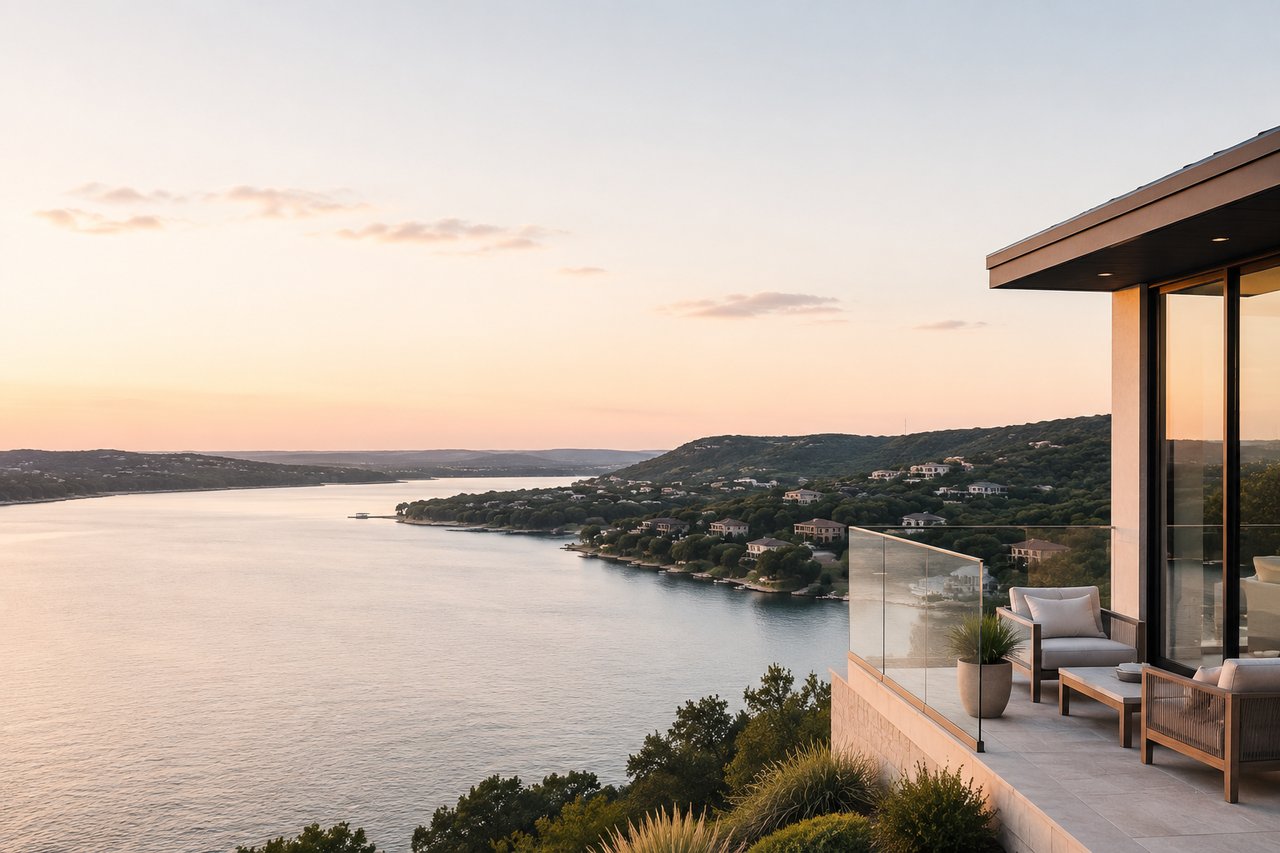
Thinking about buying or selling in Westlake and wondering how much that slice of Lake Austin view is really worth? You’re not alone. Views here are a big deal, but not all views command the same premium. In this guide, you’ll learn how different view types affect price, what to look for during due diligence, and how to market a view home for maximum value. Let’s dive in.
Why water views command a premium in Westlake
Westlake sits along the Lake Austin and Colorado River corridor, with steep hills, greenbelts, and ridgelines that create dramatic sightlines. Unobstructed lake and skyline views are scarce, and scarcity is what drives value. On top of that, Westlake already trades at the higher end of the Austin market, so view premiums stack on an elevated baseline.
Many buyers here also value privacy, elevation, and panoramic exposures. Higher lots often feel more private and offer broad vistas, which increases appeal. Even then, each property is unique. The exact value of a view depends on its quality, stability over time, and what legal access or restrictions come with it.
What defines a great view here
View type and sightline
Not all water views are equal. Direct shoreline with a private dock sits at the top. Elevated panoramic views without direct access can still command a high premium. Partial or seasonal views add modest value, and treetop or greenbelt exposures support pricing mainly through privacy and setting. Angle of view, how much sky and water you see, and the distance to the water all shape buyer perception.
Elevation and topography
Higher elevation usually brings longer sightlines and more sunlight, which buyers like. At the same time, sloped lots can create structural, access, or yard usability trade-offs. The market prices both the benefits and the challenges of hillside living.
Privacy and obstructions
Mature trees are a hallmark of Westlake. They can create seclusion while also blocking views. In some areas, tree protections limit how much you can thin or remove. Nearby homes can also affect view corridors over time, especially as infill development occurs. Long-term view stability matters to buyers.
Water access and shoreline rules
Private dock access and usable shoreline are powerful value drivers. Shoreline condition, erosion control, and any riparian rights or HOA and municipal rules also affect what you can do with the property. These legal factors change value in real and measurable ways.
Flood risk and regulatory overlays
Although many Westlake homes sit on elevated lots, some shoreline or lower parcels may carry flood risk and higher insurance costs. Flood zone status, setbacks, tree protections, and shoreline stabilization rules can limit how you modify views or access. Buyers factor these costs and constraints into their willingness to pay.
Buyer segments and priorities
Different buyers weigh views in different ways. Luxury buyers often pay premiums for unobstructed panoramas and privacy. Move-up buyers may balance view quality with everyday usability and maintenance. Investors look closely at yields and may only pay up if the rental demand and nightly rates justify it.
How much do views add? A practical matrix
Use this Westlake-focused view-grade framework as a guide. These are illustrative percentage ranges compared to a similar home without the view. In Westlake, even a mid-range premium can translate into hundreds of thousands of dollars.
Grade A — Unobstructed private water frontage with direct lake access and a private dock
Typical pricing impact: +25% to +60%
What drives it: Shoreline scarcity, immediate access, and uninterrupted sightlines.
Key caveats: Dock permissions, shoreline maintenance, and flood exposure.Grade B — Elevated panoramic lake and/or skyline view without shore access
Typical pricing impact: +15% to +35%
What drives it: Wide vistas, privacy, and dramatic hill-country scenery.
Key caveats: Future infill could affect view corridors; foliage varies by season.Grade C — Partial or seasonal water view
Typical pricing impact: +5% to +15%
What drives it: Occasional or filtered water glimpses that enhance setting.
Key caveats: Dependent on vegetation and vantage points; sensitive to photography and staging.Grade D — Greenbelt, canyon, or treetop view (no visible water)
Typical pricing impact: 0% to +10%
What drives it: Privacy, natural setting, and serene outlooks.
Key caveats: Value leans on lot usability and long-term seclusion.
Important notes:
- These are relative adjustments to comparable sales. Premiums are not additive. A Grade A lot with shoreline erosion or limited access may see lower net value than the headline range suggests.
- Local scarcity and buyer taste can stretch the high end, especially in tight luxury pockets.
Pricing and appraisal implications
Appraisals and comps
Appraisers look for comparable sales and adjust for view quality using paired-sales analysis when possible. Unique view properties have fewer true comps, which increases subjectivity. To support your price, document view quality with aerial or drone images, highlight orientation and sightlines, and gather sales that match your lot and view attributes closely.
Marketing and presentation
Presentation can move the needle. High-quality photography, golden-hour exterior shots, and well-edited drone panoramas help buyers see what you see daily. Be clear about seasonal differences. Show the view from key rooms and outdoor spaces. If there are HOA or city restrictions on tree work or docks, disclose them early so buyers can price the opportunity accurately.
Costs that offset premiums
Some view homes come with higher ownership costs. Plan for:
- Tree maintenance or selective clearing, often with permits
- Shoreline stabilization and dock construction or repairs
- Insurance or taxes that rise with assessed value
- Limited flat yard or access complexities on steep lots
Due diligence checklist for Westlake buyers
Before you make an offer, you can improve your confidence and avoid surprises by taking these steps:
- Visit the property at multiple times of day to assess glare, privacy, and activity on the water.
- If possible, compare leaf-on and leaf-off conditions to see how foliage changes the view.
- Ask for a recent survey, plot plan, and any elevation certificate that may be available.
- Review any HOA rules and local ordinances about docks, shoreline work, and tree protections.
- Consider long-term view stability by evaluating nearby parcels for probable infill or height changes.
- Get preliminary insurance feedback and understand any flood zone implications.
Quick steps for sellers to maximize view value
If you are preparing to list, a focused plan can help you capture the premium your view deserves:
- Document your view. Gather drone photos, daytime and twilight images, and room-by-room sightline shots.
- Verify permissions. Understand any tree, shoreline, setback, or dock rules before making changes.
- Stage for the view. Arrange furniture and window treatments to frame the outlook from main living spaces.
- Price to the right comps. Compare to recent sales with similar view quality, elevation, and lot features.
- Be transparent. Disclose seasonal variation and any relevant restrictions so buyers can move forward with confidence.
Local data to gather in Westlake
Here are helpful items to request or research during evaluation:
- Comparable sales with similar view grade and topography
- Aerial or drone images, surveys, and orientation diagrams
- Floodplain maps and any available elevation certificate
- Local planning and zoning information, plus HOA covenants on docks and vegetation
- Property records, assessed value history, and any permits tied to shoreline or structure work
The bottom line on view value
In Westlake, water views can add meaningful value, but the premium depends on quality, access, elevation, and long-term stability. A clear-eyed look at view grade, regulations, and ownership costs helps you price, market, and negotiate with confidence. If you want a second set of eyes on a specific property or a pricing strategy tailored to your lot and view, you do not have to figure it out alone.
Ready to evaluate a Westlake view home or list yours with professional marketing and negotiation? Reach out to Bryan Swan to schedule a free consultation.
FAQs
How much more will I pay for a Westlake water view?
- Expect a premium in the range of about +5% to +60% depending on the view grade, legal access, and scarcity relative to similar homes without the view.
Does a lake view always increase value in Westlake?
- Not always. The premium depends on view quality, long-term stability, flood risk, maintenance needs, and any legal or HOA constraints.
Are waterfront homes riskier because of flooding near Lake Austin?
- Risk varies by parcel elevation and proximity to the shoreline. Elevated lots typically have lower flood risk, while lower shoreline parcels may require flood insurance and more maintenance.
Can I rely on listing photos to judge the view?
- Photos help, but they can be selective. Visit in person at different times, and review aerial images and room-specific sightline photos to confirm what you are buying.
How do appraisers treat water views compared to buyers?
- Appraisers adjust based on comparable sales and tend to be conservative. Some buyers will pay an emotional or lifestyle premium that may exceed appraisal adjustments.