If you are preparing to sell a luxury home in Austin or the Lake Travis area, professional photography should not be treated as the final item on a marketing checklist. It is one of the first opportunities to position your home in the mind of a buyer.
Before a buyer walks through the front door, there is a good chance they will have already formed an opinion based on the photos they saw online.
That makes photography day more important than it may seem.
The camera sees a home differently than we do in person. Extra furniture can make a generous room feel smaller. Countertop clutter becomes surprisingly noticeable. A beautiful Hill Country view can disappear behind furniture or heavy window treatments. On the other hand, thoughtful preparation can help architecture, natural light, outdoor living, and distinctive finishes become the focus.
The goal is not to make your home look artificial. It is to help buyers immediately feel that it’s the one.
Why Professional Photography Matters in Luxury Real Estate
Luxury real estate is particularly visual.
Buyers are not simply evaluating bedrooms, bathrooms, and square footage. They may be comparing architecture, craftsmanship, privacy, views, entertaining spaces, pools, acreage, waterfront access, outdoor living, and the overall experience a home offers.
Your photography needs to communicate those qualities quickly.
This is especially important because the online presentation is often a buyer's introduction to the home.
A professional photographer can capture that story beautifully, but photography cannot replace preparation.
Think of it this way: the photographer captures what is there. The preparation determines what is there to capture.
Start by Deciding What the Photos Need to Communicate
One of the biggest mistakes sellers can make is preparing every room the same way.
Before photography, identify the home's strongest selling features.
Is it the architecture? Lake Travis views? A resort-style pool? An exceptional kitchen? Acreage and privacy? A dramatic living room? Indoor-outdoor entertaining? A private dock? Hill Country sunsets?
Once those priorities are clear, preparation becomes more strategic.
For example, if the view is a major selling point, furniture and decor should not compete with the windows. If the kitchen is exceptional, the countertops should be clean enough for buyers to appreciate the materials, cabinetry, appliances, and scale. If outdoor living differentiates the home, the pool, patio, landscaping, furniture, and exterior surfaces deserve the same attention as the interior.
Luxury photography should not simply document rooms.
It should establish a hierarchy of what makes the home worth noticing.
Declutter, but Don't Strip Away the Home's Personality
There is a difference between decluttering and emptying a home of character.
Luxury buyers generally respond well to spaces that feel polished, intentional, and livable. Too much furniture or decor creates visual noise. Too little can make a home feel cold or unfinished.
Start by removing:
- Excess furniture that makes rooms feel smaller
- Personal photographs and highly personal collections
- Paperwork, cords, chargers, and everyday household items
- Refrigerator magnets and notes
- Excess countertop appliances
- Toiletries and products from bathrooms
- Pet beds, bowls, toys, and supplies
- Too many decorative objects on shelves and tables
Then step back.
The objective is not an empty room. You want enough furniture and styling to communicate scale and purpose while leaving enough visual space for buyers to appreciate the architecture.
That restrained approach is consistent with the staging philosophy used throughout my marketing. A home should feel elevated and honest rather than overproduced, allowing the home, light, and setting to do the work.
Pay Particular Attention to the Kitchen
The kitchen often becomes one of the visual anchors of a luxury listing.
Before photography, clear the counters almost completely. That expensive stone countertop is difficult to appreciate when it is competing with a toaster, coffee maker, knife block, paper towels, vitamins, mail, and Tuesday's grocery list.
A few carefully selected elements are enough.
You might keep a simple bowl, understated floral arrangement, or another element that complements the home's design. The rest can usually go.
Also check:
- Appliance surfaces for fingerprints
- Cabinet fronts and hardware
- Pendant lights and bulbs
- Barstool placement
- Pantry visibility
- Sink and faucet
- Refrigerator exterior
- Floors and baseboards
The objective is to make the kitchen feel spacious, functional, and architecturally intentional rather than simply spotless.
Make the Primary Suite Feel Like a Retreat
Luxury buyers should be able to look at the primary suite and imagine checking into it.
That means calm bedding, clean nightstands, balanced lamps, minimal accessories, and very little visual clutter.
Pay close attention to bedding. Wrinkles that seem insignificant in person can become surprisingly noticeable in a high-resolution photograph.
The bathroom deserves equal attention. Clear toiletries from countertops and showers, polish mirrors and fixtures, remove bath mats when appropriate, and use clean, coordinated towels.
Closets may also be photographed in higher-end listings, particularly when they include custom cabinetry or exceptional storage. If yours is a feature, organize it accordingly.
A beautiful custom closet packed wall-to-wall with belongings stops looking like a beautiful custom closet rather quickly.
Protect Your Sightlines
One of the most important concepts in preparing a home for listing photos is the sightline.
Stand in the doorway of each important room and look across it.
What catches your eye?
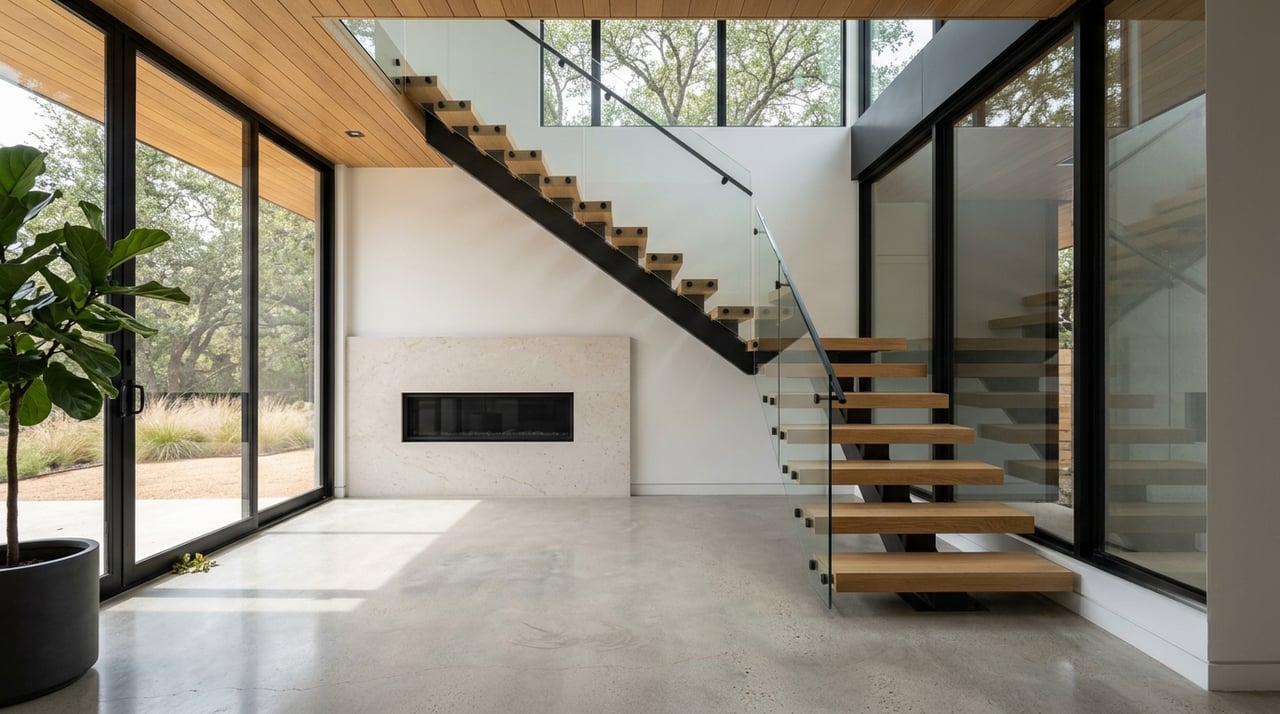
Ideally, it should be something you want a buyer to notice: a fireplace, architectural feature, wall of windows, lake view, pool, kitchen island, dramatic ceiling, or connection to another living space.
If your eye goes immediately to the back of a sofa, a large television, a pile of accessories, or an oversized chair, something may need to move.
This is particularly important in Austin luxury real estate, where many homes are designed around views and indoor-outdoor living.
The best preparation often involves removing things, not adding them.
Let the Windows and Views Do Their Job
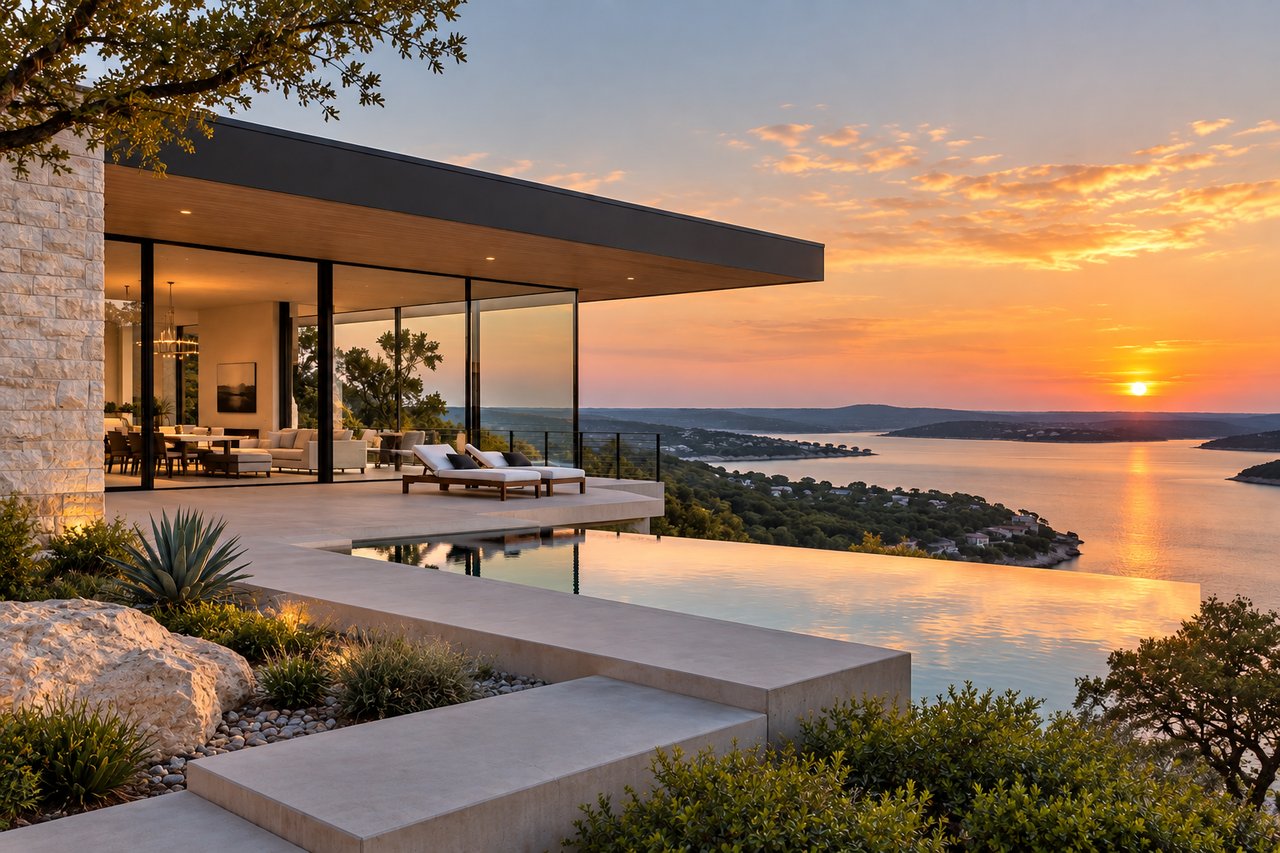
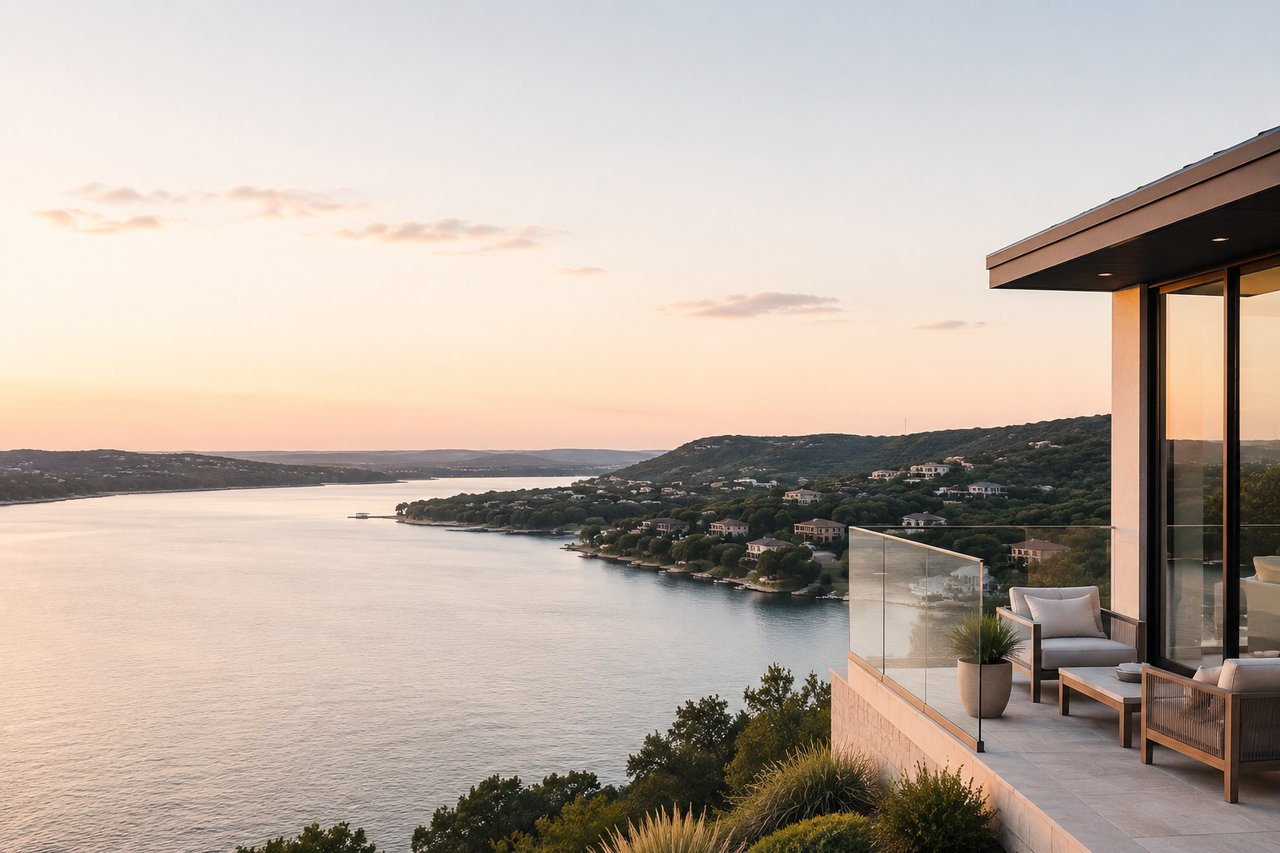
If your home has Lake Travis, Hill Country, golf course, greenbelt, pool, or sunset views, treat those views like part of the architecture.
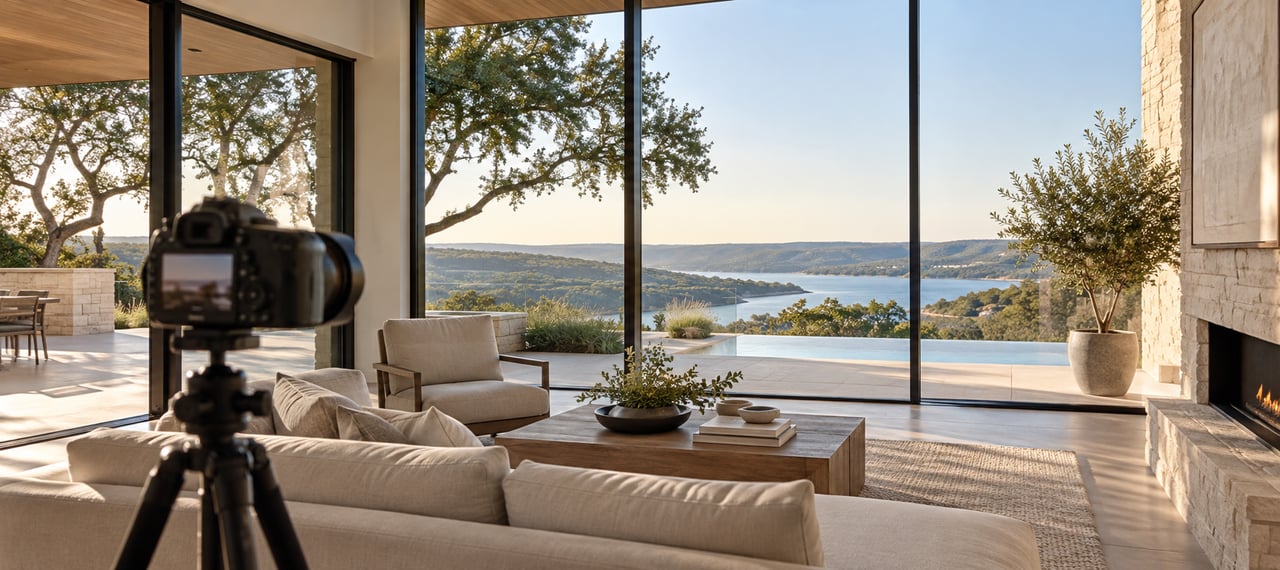
Clean the windows. Open blinds and shades as appropriate. Remove objects blocking sightlines. Consider whether furniture placement directs attention toward or away from the view.
Your existing staging guidance makes this same point for Lakeway homes, recommending open sightlines and orienting furniture toward lake or Hill Country views whenever possible.
The photographer will ultimately decide how to balance interior and exterior exposure, but sellers can help tremendously by making the view easy to see in the first place.
Don't Forget the Exterior
Photography does not begin at the front door.
For many listings, the exterior image becomes the primary photo buyers see in search results. That photograph needs to earn the next click.
Before your home photography appointment, walk the property as though you were seeing it for the first time.
Look for landscaping that needs trimming, leaves on walkways, garden hoses, trash cans, children's toys, pool equipment, dead plants, dirty outdoor cushions, vehicles in the driveway, and anything else that distracts from the home.
Then look at the details.
Clean the front door. Sweep porches and patios. Straighten outdoor furniture. Clean the pool. Turn on water features if appropriate. Make sure outdoor kitchens and entertaining areas look ready to use.
For luxury homes, outdoor spaces should be treated as actual living spaces, not leftovers after the interiors are finished. Your prior staging framework similarly recommends clean hard surfaces, thoughtfully arranged seating, sparkling pools or water features, and keeping the view as the focal point.
Prepare for Drone Photography, Too
Aerial photography can reveal things ground-level photos do not.
That is usually the point, but it means preparation needs to extend beyond the immediate patio.
Drone photography may reveal the roof, driveway, acreage, dock, pool equipment, side yards, neighboring context, landscaping, and the overall relationship between the home and its setting.
For acreage, waterfront, and Hill Country properties, those aerial perspectives can be particularly useful because they help buyers understand something ordinary interior photographs cannot communicate very well: space
Before drone photography, consider moving vehicles, storing equipment, tidying docks and outdoor areas, and addressing anything visible from above that could distract from the setting.
Lighting Matters, but More Isn't Always Better
Sellers sometimes assume photography day means turning on every light in the house.
Not necessarily.
A professional real estate photographer will typically make lighting decisions based on the room, available daylight, window exposure, and photographic style.
Your job is to make sure the photographer has good options.
Replace burned-out bulbs, match inconsistent bulb temperatures where practical, clean fixtures, open window treatments, and make sure switches are accessible.
Natural light is especially valuable in homes with large windows and scenic surroundings. Preparation should support that light rather than fight it.
Finish Repairs Before Photography
High-resolution photography has a rather inconvenient talent for noticing things.
A chipped cabinet. Missing outlet cover. Scuffed baseboard. Peeling paint. Crooked shade. Loose door handle. Burned-out light.
Small maintenance issues may not seem significant individually, but together they can subtly change the way a buyer perceives the condition of a home.
Whenever practical, complete visible touch-ups and minor repairs before photography rather than assuming they can be fixed digitally afterward.
Good photography should present the home at its best. It should not be asked to disguise problems.
Photograph the Lifestyle, Not Just the House
This is where luxury marketing becomes more nuanced.
An effective photo set should help a buyer understand not only what the home contains, but what living there might feel like.
A covered patio is not merely a covered patio. It may be where someone watches a Hill Country sunset.
A pool is not simply another feature. It may be the center of summer entertaining.
A dock can communicate an entirely different relationship with Lake Travis.
An outdoor kitchen, wine room, library, media room, guest suite, workshop, acreage, garden, or panoramic view may tell part of the lifestyle story that distinguishes the home from competing listings.
The strongest luxury marketing identifies those moments and builds the visual presentation around them.
What Should You Do the Day Before Photography?
Ideally, photography day should be about final adjustments rather than frantic preparation.
A simple final walkthrough should include checking that the home is thoroughly cleaned, countertops and nightstands are clear, beds are made carefully, windows and mirrors are clean, personal items are stored, landscaping is tidy, outdoor furniture is arranged, pools and water features are clean, vehicles and trash cans are moved, and visible light bulbs are working.
Then stop adding things.
One of the easiest ways to over-stage a luxury home is to keep decorating after the home is ready.
What I Look for Before a Luxury Listing Is Photographed
When preparing an Austin or Lake Travis luxury home for market, I am not simply asking, "Is the house clean?"
I am looking at the listing through a buyer's eyes.
What should the first image communicate? Which rooms deserve the greatest visual emphasis? Are there distractions affecting the home's scale? Are we showcasing the view properly? Does the outdoor presentation match the quality of the interior? What features differentiate this home from competing listings?
Those decisions influence the photography, video, floor plan, property website, social media, advertising, and ultimately the story we tell when the listing launches.
That is why I prefer to think of professional photography as part of a larger marketing strategy rather than a standalone service.
The Goal: Make the First Impression Match the Home
Preparing a luxury home for professional photography does not mean trying to turn it into something it is not.
It means removing distractions so buyers can see what it already is.
When the rooms feel open, the light is working, the views are unobstructed, the exterior is polished, and the home's distinctive features are intentionally highlighted, professional photography has something meaningful to capture.
And that matters because the first showing often happens before anyone schedules an appointment.
It happens online.
Schedule a Free Consultation with me to build a customized preparation and marketing plan for your home.
FAQs
How far in advance should I prepare my luxury home for listing photos?
Ideally, preparation should begin well before the photography appointment so there is time for decluttering, cleaning, landscaping, minor repairs, and staging. Photography should be one of the final steps after the home is fully prepared.
Should I remove personal photos before professional real estate photography?
Generally, yes. Reducing highly personal photographs and collections helps simplify the visual presentation and keeps attention on the home. You do not have to remove every trace of personality. The goal is a polished, welcoming environment that allows buyers to picture themselves there.
What rooms are most important for luxury listing photography?
The kitchen, primary suite, main living spaces, and outdoor living areas are typically priorities, but the answer depends on the home. In luxury real estate, distinctive features such as lake views, pools, docks, wine rooms, guest quarters, acreage, and architectural details may deserve additional emphasis.
Should a luxury home be professionally staged before photography?
Not every home needs full professional staging. However, every home benefits from intentional preparation. That may involve editing existing furniture, rearranging rooms, adding selected accessories, or staging vacant spaces depending on the home and target buyer.
Are drone photos worth it for an Austin luxury home?
They can be particularly valuable when location and setting are part of the home's story. Waterfront, acreage, Hill Country, golf course, and view properties can benefit from aerial photography because it helps buyers understand the relationship between the home, land, amenities, and surrounding area.
Can professional photo editing fix things I don't complete beforehand?
Editing can improve exposure, composition, and overall image quality, but it should not replace proper preparation or materially misrepresent the property. Whenever possible, visible maintenance issues and distractions should be addressed before the photographer arrives.