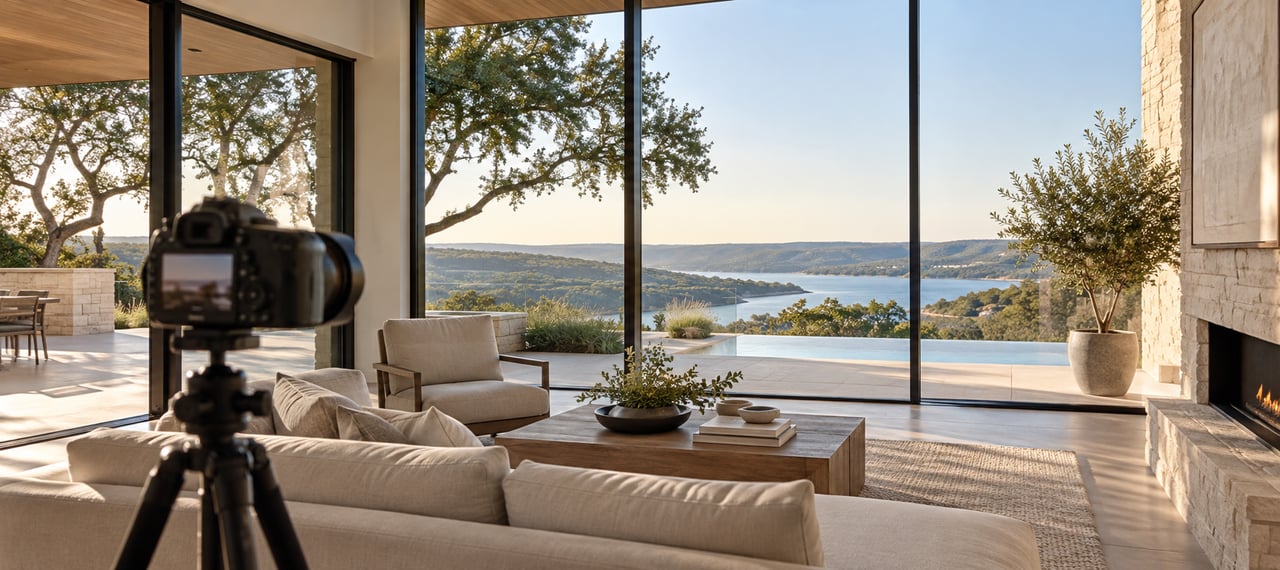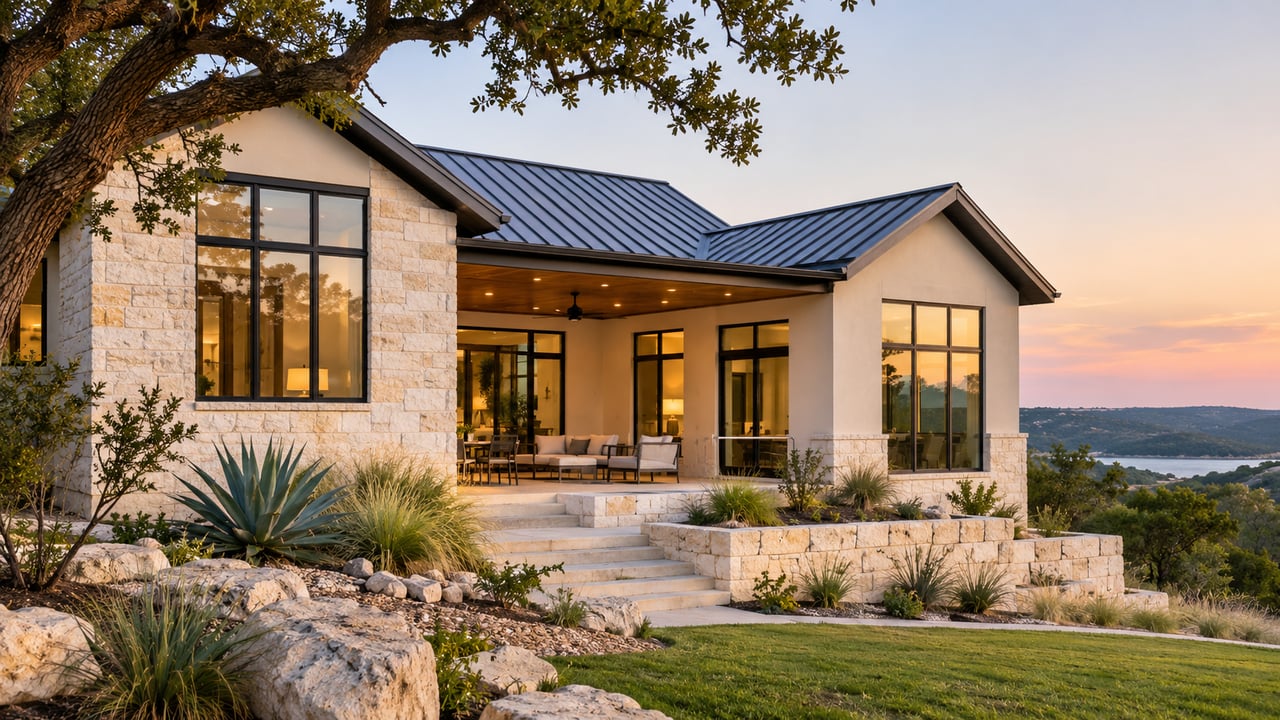
There is something exciting about walking into a brand-new home. The fresh finishes, modern floor plans, energy-efficient features, and possibility of being the first person to call it home can make new construction especially appealing.
And when that home is located in Bee Cave or Lakeway, surrounded by the natural beauty of the Texas Hill Country and the Lake Travis lifestyle, the appeal becomes even stronger.
But buying new construction involves more than choosing a floor plan, selecting countertops, and waiting for move-in day.
Between builder contracts, construction timelines, upgrades, property taxes, warranties, and neighborhood restrictions, there are important details buyers should understand before making a commitment.
The good news? With the right preparation and local guidance, buying a newly built home can be an exciting and rewarding experience.
Let's explore what buyers should know before purchasing new construction in Bee Cave and Lakeway, Texas.
Why Buyers Are Drawn to New Construction in Bee Cave and Lakeway
The Lake Travis area offers an appealing combination of Hill Country scenery, outdoor recreation, shopping, dining, and thoughtfully designed residential communities.
For buyers considering new construction, Bee Cave and Lakeway offer different lifestyle advantages worth exploring.
Bee Cave: Convenience Meets Hill Country Living
Bee Cave is known for its convenient location west of Austin, with shopping, restaurants, entertainment, and everyday amenities centered around destinations such as the Hill Country Galleria.
Newer homes in and around Bee Cave may appeal to buyers looking for:
- Contemporary architecture and open-concept floor plans
- Modern kitchens and flexible living spaces
- Energy-efficient building materials and systems
- Planned communities with neighborhood amenities
- Convenient access to shopping, dining, and major roadways
For buyers who appreciate the Hill Country setting but want everyday conveniences nearby, Bee Cave deserves a closer look.
Lakeway: An Established Lake Travis Lifestyle
Lakeway offers a different kind of appeal.
Situated along Lake Travis, the community is known for its golf courses, parks, marinas, outdoor recreation, and established residential neighborhoods.
New construction opportunities in Lakeway and surrounding areas may include custom homes, newer residential developments, and properties designed around scenic views and outdoor living.
Buyers often appreciate features such as spacious covered patios, dedicated home offices, flexible guest accommodations, and indoor-outdoor entertaining spaces.
One important distinction: Not every neighborhood marketed as part of the greater Bee Cave or Lakeway area falls within those city limits. School districts, property taxes, utilities, and development regulations can vary by address.
That's why choosing the right home begins with understanding its actual location, not simply the city name in the listing.
1. Understand the Different Types of New Construction
Not all newly built homes offer the same buying experience.
Generally, buyers will encounter three types of new construction.
Move-In-Ready Homes
Sometimes called inventory or spec homes, these properties are already completed or nearing completion.
The builder has typically selected the floor plan, finishes, and major design elements.
These homes can be appealing if you have a shorter moving timeline or prefer to see the finished product before purchasing.
Depending on the builder's inventory and sales goals, there may also be opportunities to negotiate pricing or incentives.
Homes Under Construction
These properties are already being built but may still offer opportunities for limited customization.
Depending on the construction stage, buyers might be able to select certain finishes, fixtures, or design features.
However, structural changes and major floor-plan modifications may no longer be possible.
To-Be-Built or Custom Homes
For buyers seeking greater personalization, building from an available floor plan or commissioning a custom home may offer more flexibility.
You may have input on everything from architectural details to cabinetry, flooring, and outdoor living spaces.
The tradeoff is often a longer timeline, more decisions, and greater potential for changes to the original budget.
My advice: Before falling in love with a model home, decide how much customization you actually want and how much uncertainty you're comfortable managing.
Sometimes the best home is not the one with the most options. It's the one that fits your lifestyle, timeline, and financial goals.
2. The Model Home Isn't Always What You're Buying
Model homes are designed to make an impression.
Beautiful lighting, designer furnishings, upgraded cabinetry, dramatic backsplashes, and professionally landscaped outdoor spaces can make the entire home feel exceptional.
And that's exactly the point.
However, many of those features may not be included in the advertised base price.
Before comparing builders or floor plans, ask what comes standard and what costs extra.
Common upgrades may include:
- Premium flooring and countertops
- Upgraded appliances and cabinetry
- Extended covered patios
- Additional electrical outlets and lighting
- Enhanced bathroom finishes
- Outdoor kitchens and fireplaces
- Garage extensions or storage improvements
- Landscaping and irrigation packages
A home advertised at one price can become considerably more expensive once design selections, lot premiums, and other upgrades are included.
Request a detailed list of standard features and available upgrades before committing.
Also ask whether the price includes the specific homesite you're considering.
In the Hill Country, lot characteristics such as slope, views, orientation, and buildability can influence both construction costs and the finished home's appeal.
3. Builder Incentives Can Be Valuable, but Read the Details
Builders sometimes offer incentives to attract buyers, particularly on completed inventory homes or properties they want to sell within a particular timeframe.
These incentives may include closing-cost assistance, interest-rate buydowns, design-center credits, appliance packages, or price adjustments.
They can be worthwhile, but the advertised benefit is only part of the equation.
For example, a builder may offer a mortgage-rate incentive when you use its preferred lender.
That sounds attractive, but buyers should compare the complete financing package, including the interest rate, loan fees, discount points, closing costs, and any conditions attached to the incentive.
A lower advertised rate does not automatically mean the lowest overall borrowing cost.
Similarly, an upgrade allowance may be less valuable if the builder's upgrade prices are substantially higher than comparable alternatives.
What should you ask?
- Is the incentive available on every home or only selected inventory?
- Must I use the builder's preferred lender or title company?
- Can incentives be applied toward closing costs or a rate buydown?
- Are there restrictions or expiration dates?
- How does the final purchase price compare with similar homes?
The goal isn't simply to negotiate the largest incentive.
It's to understand the total value of the transaction.
4. Don't Assume New Construction Means You Can Skip Inspections
One of the biggest misconceptions about buying a new home is that a professional inspection isn't necessary.
After all, everything is new.
What could possibly go wrong?
The reality is that even newly constructed homes can have installation issues, incomplete work, drainage concerns, or items that need correction.>
Municipal building inspections and independent buyer inspections serve different purposes.
Local authorities inspect applicable construction work for code compliance. An independent inspector evaluates the property's condition and identifies concerns for the buyer.
Depending on the construction stage and the builder's access policies, buyers should consider several inspections.
Pre-Drywall Inspection
Performed before walls are closed, this inspection may help identify visible concerns involving framing, plumbing, electrical components, and other accessible systems.
Final Inspection
Completed near the end of construction, this inspection evaluates accessible systems, finishes, appliances, and other components before closing
Warranty Inspection
A follow-up inspection before an applicable builder warranty expires can help identify issues that may need attention while coverage remains available.
For properties in Bee Cave and Lakeway, I would also pay particular attention to site drainage, grading, retaining walls, exterior water management, and the relationship between the home and surrounding terrain.
Hill Country lots can be beautiful, but their topography deserves careful evaluation.
A new home should offer peace of mind. Independent inspections help buyers make more informed decisions about its condition.
5. Understand Property Taxes Before Calculating Your Monthly Payment
Property taxes are especially important when purchasing newly constructed homes in Texas.
Here's why.
The current tax record for a newly developed property may reflect the value of the land or a partially completed home rather than the value of the finished residence.
That can create a misleading impression of future property taxes.
For example, if a property was previously assessed primarily as vacant land, its tax bill may increase after the completed home is included in the appraisal.
Buyers should not assume the seller's current tax bill represents their future annual expense.
Before purchasing, investigate:
- The property's applicable taxing jurisdictions
- >The anticipated value of the completed home
- Current local property tax rates
- Potential homestead exemption eligibility
- Any applicable Municipal Utility District (MUD) or Public Improvement District (PID) obligations
- How the estimated tax amount affects the monthly mortgage payment
The applicable county appraisal district and tax offices can help verify the property's taxing jurisdictions and available records.
My advice: Build your budget around a reasonable estimate for the completed home, not simply the taxes shown on an unfinished property.
A beautiful new home should fit comfortably into your financial picture long after the excitement of closing day.
6. Review HOA Rules and Community Restrictions Carefully
Many newer residential developments have homeowners associations that establish architectural standards, maintenance requirements, and community rules.
These can help maintain neighborhood standards, but they may also limit what owners can do with their property.
Before purchasing, review the governing documents and ask questions about:
- Monthly or annual HOA assessments
- Planned amenities and their completion timelines
- Architectural approval requirements
- Fencing and landscaping restrictions
- Parking and recreational vehicle storage
- Boat and trailer storage
- Short-term rental restrictions
- Future construction phases
- Potential special assessments
This is particularly important around Lake Travis, where buyers may have specific expectations about outdoor living, recreational equipment, or access to the lake.
For example, purchasing a home near Lake Travis does not automatically mean you have private lake access, marina privileges, or permission to install a boat dock.
Those rights and amenities must be verified for the specific property.
And if you're buying in a developing neighborhood, remember that the community shown in the sales brochure may take years to fully develop.
Ask which amenities are completed, which are planned, and what obligations the developer has actually committed to in writing.
7. Construction Timelines Aren't Always Guaranteed
If you're purchasing a home that is still under construction, the estimated completion date is an important part of your planning.
But an estimated date is not necessarily a contractual guarantee.
Weather conditions, material availability, labor scheduling, inspections, utility connections, and design changes can affect construction progress.
For buyers relocating to the Austin area or coordinating the sale of an existing home, those delays can create additional expenses and logistical challenges.
Before signing, understand:
- The builder's estimated completion timeline
- What happens if construction is delayed
- Whether the contract allows the builder to extend completion
- How closing dates are established
- Whether financing commitments or rate locks could expire
- What happens if the home is not completed within the expected timeframe
It's also wise to maintain flexibility when arranging movers, temporary housing, and the sale of your current property.
The more clearly you understand the timeline and contract provisions, the easier it becomes to plan around unexpected changes.
8. Review the Builder's Warranty Before You Buy
A builder warranty can provide valuable protection, but not every warranty offers the same coverage.
Some builders use warranties with separate coverage periods for workmanship, mechanical systems, and structural components.
Others use different terms, exclusions, claim procedures, and dispute-resolution requirements.
Before purchasing, request the complete written warranty and review:
- What is covered and excluded
- How long each type of coverage lasts
- Whether coverage transfers to a future buyer
- How warranty claims must be submitted
- Required maintenance responsibilities
- Deadlines for reporting defects
- How disagreements are resolved
Pay particular attention to the difference between a cosmetic issue and a structural or mechanical concern.
Also remember that a warranty is not a substitute for a thorough inspection or careful review of the purchase contract.
Understanding your protections before closing is much easier than discovering limitations after a problem appears.
9. Consider the Neighborhood's Long-Term Development
When buying in a newer community, you're not just purchasing a home.
You're also making a decision about the neighborhood that will develop around it.
An attractive open space behind a model home may eventually become another phase of residential construction.
A quiet street could become a more heavily traveled route as nearby development continues.
And community amenities advertised during the sales process may not yet be completed.
Before buying, investigate nearby land use, planned roads, future development phases, and any available municipal planning information.
For properties within Bee Cave or Lakeway, the respective city planning and development departments can be useful resources. Properties outside city limits may fall under different jurisdictions.
Ask whether the surrounding land is privately owned, protected, or potentially available for future development.
This is especially important when purchasing a home because of its Hill Country views, privacy, or peaceful setting.
A view today is not necessarily a protected view tomorrow.
Understanding the surrounding property can help you make a more informed long-term decision.
Why Having Your Own REALTOR® Matters With New Construction
Walking into a builder's model home can feel different from touring a traditional resale property.
There is a friendly sales representative, professionally designed displays, and someone ready to answer questions about the community.
But it's important to understand whom that representative works for.
The builder's sales team represents the builder's interests.
That doesn't mean the experience can't be positive. It simply means buyers benefit from having someone focused on their side of the transaction.
An experienced buyer's agent can help you:
- Compare new construction with existing homes
- Evaluate builder pricing and incentives
- Research comparable sales
- Review neighborhood and property considerations
- Coordinate independent inspections
- Identify questions about contracts and warranties
- Navigate construction and closing milestones
- Consider long-term resale appeal
Builder registration and representation policies can vary, so it's wise to establish your own representation before visiting model homes.
In Texas, written agreements are required for certain residential buyer brokerage activities, and compensation is negotiable. Any builder contribution toward buyer-agent compensation should be confirmed rather than assumed.
For complex builder contract provisions, an attorney can provide legal advice.
The right guidance can help you evaluate the entire purchase, not simply the home that looks best during a weekend tour.
New Construction vs. Existing Homes: Which Is the Better Choice?
New construction offers advantages, but it isn't automatically the best fit for every buyer.
A newly built home may provide modern layouts, newer systems, contemporary finishes, and fewer immediate renovation projects.
An established home, however, may offer mature landscaping, a larger homesite, a more developed neighborhood, or a location closer to existing amenities.
In Bee Cave and Lakeway, those differences can be especially meaningful.
Some buyers prefer the convenience and personalization of a newly built home.
Others are drawn to established Lake Travis neighborhoods where the landscaping, surrounding homes, and community character have had years to develop.
Neither choice is universally better.
The right decision depends on your priorities, budget, lifestyle, and long-term plans.
When comparing properties, consider the total cost of ownership, lot characteristics, neighborhood amenities, maintenance expectations, and potential resale appeal.
Sometimes the newest home is the best option.
Other times, the home that has already settled comfortably into its surroundings offers something new construction cannot easily replicate.
Questions to Ask Before Buying New Construction in Bee Cave or Lakeway
Before making a commitment, keep these questions handy:
- What is included in the advertised purchase price?
- Are there additional lot premiums or upgrade costs?
- What builder incentives are currently available?
- Can I use my own lender, inspector, and REALTOR®?
- What are the estimated property taxes on the completed home?
- Are there HOA, MUD, PID, or other recurring assessments?
- What inspections are permitted during construction?
- What does the builder's warranty actually cover?
- What happens if construction is delayed?
- Are there future development plans that could affect the property?
These questions can help you compare homes more effectively and identify potential concerns before they become expensive surprises.
Finding the Right New Construction Home in the Lake Travis Area
Buying new construction should be about more than finding a beautiful floor plan or the latest design trends.
It's about understanding what you're purchasing, how the home fits your lifestyle, and whether the investment makes sense for your long-term goals.
In Bee Cave and Lakeway, that means looking beyond the model home to evaluate the neighborhood, homesite, builder, financing, and surrounding community.
When I work with buyers in the Lake Travis area, my goal is to help them make informed decisions with a clear understanding of both the opportunities and the tradeoffs.
Whether you're considering a move-in-ready home, a property under construction, or a custom Hill Country residence, having thoughtful guidance can make the experience more manageable.
The best purchase isn't necessarily the newest home or the one with the most upgrades.
It's the one that feels right for your life today and continues to make sense tomorrow.
Thinking About Buying New Construction in Bee Cave or Lakeway?
I'd be happy to help you explore available opportunities, compare builders and communities, and develop a home search that reflects your priorities.
Schedule a Free Real Estate Consultation with me, and let's find a home that fits the way you want to live.
Frequently Asked Questions (FAQs)
Is buying new construction in Bee Cave or Lakeway a good investment?
New construction can be an attractive long-term purchase, particularly when the home's location, quality, pricing, and neighborhood align with buyer demand. However, appreciation is never guaranteed. Buyers should compare nearby resale properties, future development, ownership costs, and market conditions before making a decision.
Do I need a REALTOR® when buying from a builder?
You are not necessarily required to hire a buyer's agent, but having independent representation can be valuable. A REALTOR® can help evaluate pricing, compare communities, explain the buying process, and coordinate due diligence. Builder representatives work for the builder, so buyers should understand their representation options before visiting.
Can you negotiate the price of a new construction home?
Sometimes. Builders may be willing to discuss purchase prices, closing-cost contributions, financing incentives, or upgrades. Negotiability depends on inventory, demand, construction stage, and the builder's current sales strategy.
Should I get a home inspection on new construction?
Yes, independent inspections are generally advisable. New homes can still have construction defects, installation issues, or incomplete work. Depending on the builder's policies and construction stage, buyers may consider pre-drywall, final, and warranty inspections.
Are property taxes higher on new construction homes in Bee Cave and Lakeway?
Not necessarily. Property taxes depend on the completed property's taxable value, applicable tax rates, exemptions, and taxing jurisdictions. However, a newly completed home may have a substantially higher tax bill than the prior assessment of the vacant or partially improved lot.
How long does it take to build a new home in the Lake Travis area?
Construction timelines vary based on the builder, type of home, design complexity, permitting, weather, and material availability. Move-in-ready homes may be available much sooner than homes built from the ground up. Buyers should verify the estimated completion date and understand any contractual provisions allowing delays.
Are new construction homes in Lakeway guaranteed to have lake access?
No. A Lakeway address or proximity to Lake Travis does not automatically include private lake access, a boat slip, or dock rights. Buyers should verify deeded rights, community amenities, marina arrangements, and applicable restrictions before purchasing.